
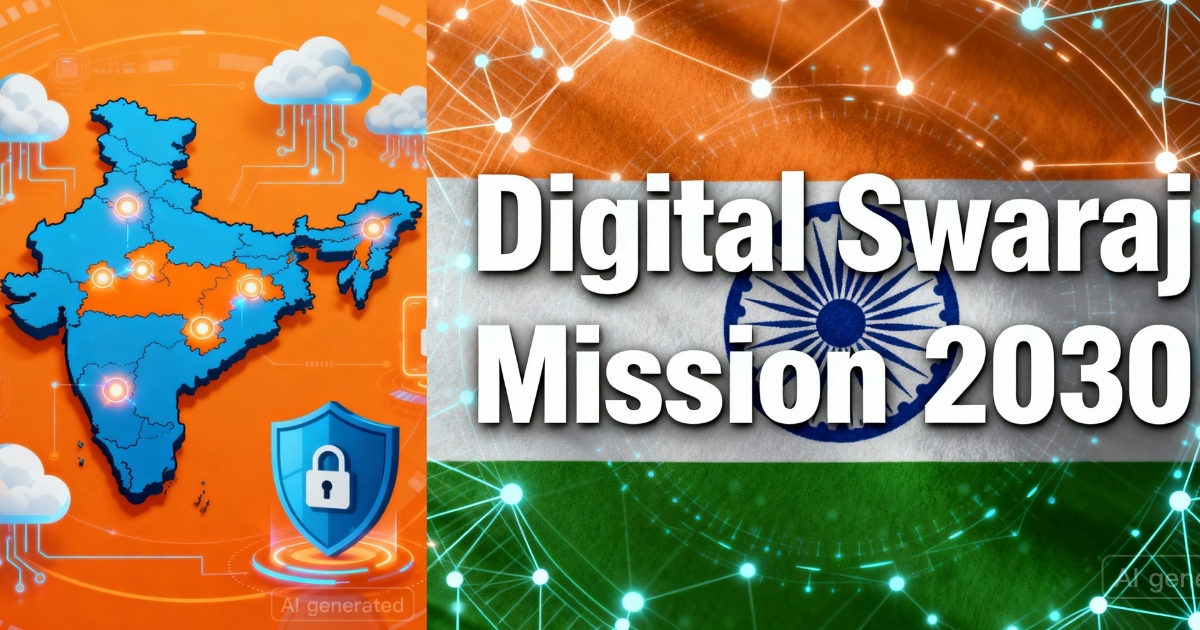
भारत की digital economy आज 500 मिलियन से ज्यादा smartphones पर चलती है, लेकिन सभी Google के Android पर निर्भर हैं। देश की government services, defence systems और digital payments – सब कुछ US-controlled platforms पर operate करते हैं। इसी vulnerability को देखते हुए Global Trade Research Initiative यानी GTRI ने एक बड़ा proposal दिया है – Digital Swaraj Mission 2030, जो India को complete tech self-reliance की ओर ले जाएगा।
Digital Swaraj Mission क्या है?
GTRI द्वारा प्रस्तावित Digital Swaraj Mission एक phased approach है जो India को 2030 तक operating systems, cloud infrastructure, cybersecurity और AI में आत्मनिर्भर बनाएगा। यह mission चार मुख्य pillars पर आधारित है जो देश की tech sovereignty को मजबूत करेंगे।
भारत की Tech Dependence: आंकड़े
500 मिलियन+ smartphones Android पर चलते हैं
90%+ government systems US software पर निर्भर
20% global data India generate करता है
2-3% उसमें से भारत के पास सिर्फ इतना है
Digital Swaraj के चार स्तंभ
1. Sovereign Cloud Infrastructure
सबसे पहला कदम है critical data को Indian soil पर host करना। Government, defence और banking जैसे sensitive sectors का data पूरी तरह देश के अंदर stored और managed होगा। इससे data breaches और foreign surveillance का खतरा खत्म होगा।
2. Indigenous Operating Systems
Windows और Android की जगह BharOS जैसे homegrown operating systems को develop और promote किया जाएगा। Short-term में government ministries में Linux pilots शुरू होंगे, और medium-term में पूरी तरह Indian OS पर migration हो जाएगा।
3. Homegrown Cybersecurity Framework
National infrastructure को protect करने के लिए indigenous cybersecurity solutions develop किए जाएंगे। Public-private partnerships के through cybersecurity consortia बनेंगे जो real-time threats से निपट सकेंगे।
4. Data-Driven AI Leadership
India का massive data pool (1.4 billion users) एक strategic asset है। इसे leverage करके domestic AI ecosystem build किया जाएगा जो globally competitive होगा – बिल्कुल UPI और ONDC की तरह।
Video: GTRI की Digital Swaraj Mission 2030 की पूरी जानकारी
Timeline: कैसे होगा Implementation?
Digital Swaraj Mission को तीन phases में execute किया जाएगा:
- Short-term (1-2 years): Mandatory sovereign cloud hosting for critical data, national OS programme launch, और select ministries में Linux pilots की शुरुआत।
- Medium-term (3-5 years): Government systems का complete migration Indian software पर, public-private cybersecurity consortia fully operational, और indigenous software tools का widespread adoption।
- Long-term (5-7 years): Cloud parity achieve करना, defence और critical sectors में foreign OS को replace करना, और globally competitive open-network platforms build करना।
क्यों जरूरी है Digital Sovereignty?
Current geopolitical tensions के बीच, tech dependence एक major vulnerability है। US ने पहले भी trade tariffs और sanctions के through pressure डाला है। अगर कभी US-India relations बिगड़ें, तो technology cutoff का सीधा असर होगा:
- Digital payments और banking services instant रूप से ठप हो जाएंगी
- Tax filing systems और government portals काम करना बंद कर देंगे
- Defence systems और critical infrastructure खतरे में पड़ सकते हैं
- Social media और communication platforms पर foreign control से disinformation campaigns का खतरा बढ़ेगा
China और Europe पहले ही अपने sovereign digital ecosystems build कर चुके हैं। India को भी अब tech sovereignty के मामले में पीछे नहीं रहना चाहिए।
Atmanirbhar Bharat से Digital Swaraj तक
Digital Swaraj Mission असल में Atmanirbhar Bharat की digital extension है। जिस तरह manufacturing में self-reliance promote की जा रही है, वैसे ही digital infrastructure में भी indigenous capability develop करना जरूरी है। Government initiatives जैसे Digital India, Make in India और Swadeshi movement के साथ यह mission perfectly align करता है।
Ministers पहले ही Zoho Mail, MapmyIndia जैसे Indian platforms adopt कर रहे हैं। BharatNet programme के through rural areas में high-speed internet पहुंच रहा है। SVAMITVA scheme digital land mapping कर रही है। ये सब छोटे-छोटे कदम हैं जो bigger Digital Swaraj vision की ओर ले जा रहे हैं।
Challenges और Way Forward
हालांकि Digital Swaraj Mission ambitious है, लेकिन कुछ challenges भी हैं। Indigenous OS को mass adoption तक पहुंचाना, skilled workforce develop करना, और private sector को onboard करना – ये सब बड़े challenges हैं। लेकिन India के पास talent और market दोनों हैं।
GTRI का कहना है कि इस mission के लिए government policy support, capital investment और industry collaboration तीनों जरूरी हैं। Startups के लिए यह एक brand new frontier खुल रहा है जहां वे indigenous technology solutions develop कर सकते हैं।
🚀 Digital Swaraj Mission India के tech future का blueprint है। क्या India 2030 तक tech sovereignty achieve कर पाएगा?
Tags: Digital Swaraj Mission, Tech Sovereignty, GTRI Report, Atmanirbhar Bharat, Indigenous Technology, Sovereign Cloud, BharOS, Digital India, Cybersecurity India, Data Localization