
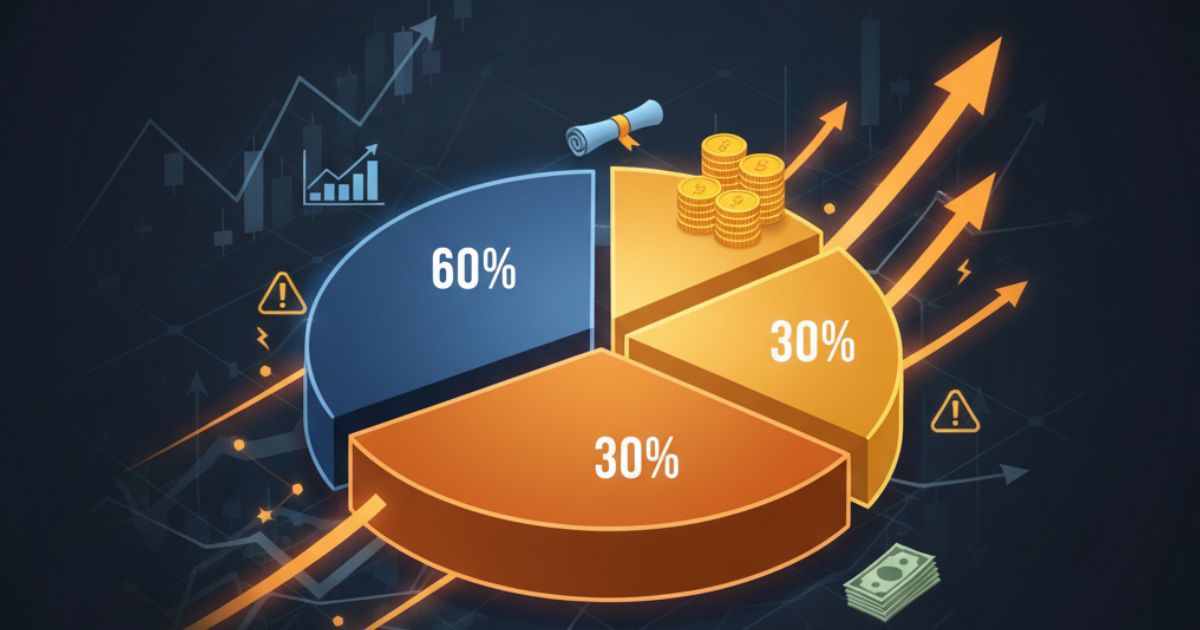
दिसंबर 2025 में आपका portfolio सही direction में है या नहीं? Market volatility और बदलते economic conditions के बीच asset allocation strategy आपकी wealth को protect और grow करने की key है। चाहे आप aggressive investor हों या conservative, सही allocation formula आपके financial goals तक पहुंचने में game changer बन सकता है।
Quick Summary: Key Points
- Asset Allocation 2025: Equities में 10% upside potential के साथ positive outlook, bonds में stable yields (7.5% तक), और cash liquidity के लिए जरूरी
- Risk Profiles: Aggressive (70-80% equity), Moderate (40-50% equity), Conservative (30% equity) – आपकी risk appetite के अनुसार चुनें
- Time Horizon Matter: Long-term goals (10+ years) के लिए aggressive, short-term (3-5 years) के लिए conservative allocation best है
- International Diversification: 2025 में international equities ने US markets को outperform किया – portfolio में 15-20% international exposure जरूरी
- Rebalancing Strategy: साल में कम से कम दो बार portfolio review करें और market conditions के अनुसार adjust करें
Asset Allocation क्या है और 2025 में क्यों जरूरी?
Asset allocation का मतलब है अपने investment portfolio को different asset classes – equities (stocks), bonds (fixed income), cash और alternative investments – में divide करना। यह diversification strategy आपके portfolio के risk-reward ratio को balance करती है।
December 2025 में global markets एक critical phase में हैं। US Federal Reserve की monetary policy, geopolitical tensions, और AI-driven economic growth के बीच, एक well-planned asset allocation strategy पहले से कहीं ज्यादा important हो गई है। Major financial institutions like UBS, JPMorgan और BlackRock ने अपने outlook में diversification पर जोर दिया है।
Financial experts के अनुसार, 2025 में US equities में December तक 10% upside potential है, जबकि bonds में 7.5% के around stable yields मिल रहे हैं। लेकिन सवाल यह है – आपके portfolio में इन asset classes का ratio क्या होना चाहिए? यह depend करता है आपकी risk profile, time horizon और financial goals पर।
तीन Major Asset Classes: Equities vs Bonds vs Cash
Equities (Stocks): Growth का Powerhouse
क्या है: Company के shares में investment – ownership stake मिलता है और capital appreciation + dividends से returns आते हैं।
2025 Outlook: Global equities के लिए positive outlook है। US equities में AI innovations और 2% economic growth की वजह से attractive opportunity है। International equities ने 2025 में surprisingly strong performance दिया है – 1993 के बाद सबसे ज्यादा US markets को outperform किया।
Risk Factor: High volatility – short-term में market fluctuations से portfolio value कम हो सकती है। लेकिन long-term में historically highest returns देती हैं (10-12% average annual returns)।
किसके लिए: Long-term investors (10+ years horizon) जो higher returns के लिए volatility handle कर सकते हैं।
Bonds (Fixed Income): Stability का Foundation
क्या है: Government या corporate entities को loan देना – fixed interest payments (coupon) मिलती हैं और maturity पर principal amount वापस आता है।
2025 Outlook: Intermediate duration treasuries और investment grade bonds attractive हैं। Current में high yield bonds 7.5% के around all-in yields दे रहे हैं। Central banks की easing cycle ने bond markets को support किया है।
Risk Factor: Interest rate risk – जब rates बढ़ते हैं तो bond prices गिरती हैं। Credit risk भी है (especially corporate bonds में)। लेकिन equities से कम volatile।
किसके लिए: Income-seeking investors, retirees, या जो capital preservation चाहते हैं।
Cash & Cash Equivalents: Liquidity का Safety Net
क्या है: Savings accounts, money market funds, liquid funds, fixed deposits (short-term) – जल्दी access मिलता है।
2025 Outlook: Emergency fund के लिए essential। Experts recommend करते हैं कि कम से कम 12 months के expenses के बराबर cash liquidity maintain करें।
Risk Factor: Inflation risk – returns inflation से कम होते हैं, तो purchasing power slowly घटती है। लेकिन capital loss का zero risk।
किसके लिए: Everyone – emergency fund, short-term goals (1 year के अंदर), या market entry timing के लिए।
Risk Profile के अनुसार Allocation Percentages
Aggressive Portfolio: Maximum Growth के लिए
Target Audience: Young investors (25-40 age), long-term horizon (15+ years), high risk tolerance, regular income source से financially secure।
Recommended Allocation (December 2025):
| Asset Class | Allocation | Breakdown |
|---|---|---|
| Equities | 70-80% | • Large-cap: 30-35% • Mid-cap: 20-25% • Small-cap: 15-20% • International: 15-20% |
| Bonds | 15-20% | • Corporate bonds: 10-12% • Government securities: 5-8% |
| Cash/Liquid | 5% | • Emergency fund • Opportunity fund |
Expected Returns: 12-15% annually (long-term average)। लेकिन याद रखें – volatility high होगी, कुछ years में negative returns भी हो सकते हैं।
Key Strategy: 2025 में US tech stocks (AI sector) में selective exposure लें। International diversification के लिए emerging markets और European equities consider करें – ये 2025 में strong momentum show कर रहे हैं।
Moderate Portfolio: Balanced Approach
Target Audience: Mid-career professionals (35-50 age), moderate risk tolerance, retirement 10-15 years दूर, stable income लेकिन major losses नहीं झेल सकते।
Recommended Allocation (December 2025):
| Asset Class | Allocation | Breakdown |
|---|---|---|
| Equities | 45-50% | • Large-cap: 25-30% • Mid-cap: 10-15% • International: 10% |
| Bonds | 40-45% | • Government bonds: 20-25% • Corporate bonds: 15-20% • Inflation-linked: 5% |
| Cash/Alternatives | 10% | • Liquid funds: 5% • Gold/Commodities: 5% |
Expected Returns: 8-10% annually। Volatility moderate रहेगी – aggressive से कम drawdowns।
Key Strategy: 2025 outlook के अनुसार, bond allocation में laddered maturities use करें – 75% को 2-5 year duration में concentrate करें। यह yield और rate risk को balance करता है। Equity side पर quality bias maintain करें – strong balance sheets वाली companies prefer करें।
Conservative Portfolio: Capital Protection Priority
Target Audience: Pre-retirees या retirees (55+ age), low risk tolerance, short-term goals (3-5 years), regular income की जरूरत, capital loss afford नहीं कर सकते।
Recommended Allocation (December 2025):
| Asset Class | Allocation | Breakdown |
|---|---|---|
| Equities | 25-30% | • Large-cap/Blue-chip: 20-25% • Dividend-paying: 5-10% |
| Bonds | 55-60% | • Government bonds: 30-35% • High-grade corporate: 15-20% • Fixed deposits: 10% |
| Cash/Liquid | 15% | • Liquid funds: 10% • Savings: 5% |
Expected Returns: 5-7% annually। Capital preservation focus के साथ inflation-beating returns।
Key Strategy: Current environment में short-duration bonds (2-3 years) attractive हैं – long-duration के 85% yields दे रहे हैं लेकिन 40% कम volatility के साथ। Treasury bonds और AAA-rated corporate bonds में focus रखें। Equity exposure sirf quality blue-chip stocks में रखें जो consistent dividends देती हैं।
Time Horizon: Investment Duration का Impact
आपकी investment time horizon – यानी कब तक पैसा invested रहेगा – asset allocation decide करने में crucial role play करती है।
Short-term Goals (1-3 Years)
Examples: Car purchase, marriage expenses, home down payment, vacation fund।
Ideal Allocation:
- Equities: 10-20% (sirf stable large-caps)
- Bonds: 50-60% (short-duration, high-quality)
- Cash/Liquid: 30-40%
Reason: Short-term में market volatility से portfolio value significant drop हो सकती है। जब पैसा चाहिए उस time market down हो तो forced selling करनी पड़ेगी – loss book हो जाएगा। इसलिए capital preservation priority है।
Medium-term Goals (3-7 Years)
Examples: Child’s education (school to college), business expansion, property investment।
Ideal Allocation:
- Equities: 40-50%
- Bonds: 40-50%
- Cash: 5-10%
Reason: 3-7 years की window में market cycles को ride कर सकते हैं – bear markets से recover होने का time मिलता है। Balanced approach से growth और stability दोनों मिलती हैं।
Long-term Goals (10+ Years)
Examples: Retirement planning, child’s higher education (infant से college), wealth creation।
Ideal Allocation:
- Equities: 70-80%
- Bonds: 15-25%
- Cash: 5%
Reason: Long-term में equities historically सबसे high returns देती हैं। Market volatility का negative impact time के साथ reduce होता है – 10+ years में positive returns की probability 95%+ है। Compound growth की power maximize होती है।
Pro Tip: जैसे-जैसे goal करीब आए, allocation को conservative बनाते जाएं। Example: Retirement से 10 years पहले 80% equity से शुरू करें, retirement के time तक 30-40% तक reduce करें – यह glide path strategy कहलाती है।
International Diversification: 2025 का Game Changer
2025 में international diversification ने अपनी importance prove की है। US policy uncertainty और tariff concerns के बावजूद, international equities ने US markets को year-to-date में largest margin (1993 के बाद सबसे ज्यादा) से outperform किया है।
International Exposure क्यों जरूरी?
1. Geographic Diversification: सिर्फ एक country की economy पर dependent नहीं रहना। US recession में भी emerging markets grow कर सकते हैं।
2. Sector Exposure: कुछ industries specific regions में dominate करती हैं – luxury goods (Europe), manufacturing (China, Japan), commodities (Australia, Canada)।
3. Currency Benefit: Dollar weakness के phase में unhedged international investments से extra returns मिलते हैं। 2025 में dollar 8% से ज्यादा weaken हुआ है।
4. Valuation Advantage: US markets के मुकाबले international markets (especially emerging markets) attractive valuations पर trade कर रहे हैं।
Recommended International Allocation (2025)
| Risk Profile | Total International Exposure | Regional Breakdown |
|---|---|---|
| Aggressive | 20-25% | Developed markets: 12-15% Emerging markets: 8-10% |
| Moderate | 15-20% | Developed markets: 10-12% Emerging markets: 5-8% |
| Conservative | 10-15% | Developed markets: 8-12% Emerging markets: 2-3% |
Key Markets to Watch (December 2025):
Japan: Fiscal spending initiatives और corporate governance reforms से attractive। Portfolio में 20-25% international allocation का Japan में रखें।
Europe: US tariff drama की वजह से forced policy changes – fiscal spending increase हो रही है। European equities में earning growth momentum है।
Emerging Markets: China के economic stimulus measures (late 2024) से positive signal। India, Brazil, और Southeast Asian markets में selective opportunities।
Implementation Tip: International mutual funds या ETFs use करें – individual stock picking mushkil है। Unhedged funds prefer करें अगर dollar weakness scenario believe करते हैं (current trends यही suggest कर रहे हैं)।
Portfolio Rebalancing: Discipline है Zaruri
एक बार allocation set कर लिया, बस! नहीं – regular rebalancing जरूरी है। Market movements से आपका original allocation drift हो जाता है।
Example: मान लीजिए आपने 60% equity, 40% bonds से start किया। एक साल में equity market 20% up गई, bonds flat रहे। अब आपका portfolio 65% equity, 35% bonds हो गया – planned से ज्यादा risky।
Rebalancing Strategy (2025 Recommendations)
1. Time-based Rebalancing: साल में दो बार (June, December) fixed dates पर review करें। Disciplined approach है।
2. Threshold-based Rebalancing: जब भी कोई asset class original allocation से 5% ज्यादा deviate हो, तब rebalance करें। Dynamic approach है।
3. Tactical Adjustments: Major market events पर short-term tweaks – जैसे 2025 में US tariff announcements या Fed policy changes पर 2-5% shifts।
Rebalancing Process:
- Step 1: Current allocation calculate करें – किस asset class का कितना percentage है।
- Step 2: Target allocation से compare करें – कहां deviation है।
- Step 3: Over-performing assets sell करें, under-performing में buy करें – original ratio restore हो जाए।
- Step 4: Tax implications consider करें – long-term holdings को prefer करें (capital gains tax benefit)।
Cost Management: Frequent trading से transaction costs और taxes बढ़ते हैं। Rebalancing sirf significant deviations पर करें, minor fluctuations ignore करें।
Practical Implementation: Kaise Shuru Karein
Step 1: Apni Risk Profile Identify Karein
Khud se puchein:
- Market crash में 20-30% portfolio value drop handle kar sakta hoon? (Yes = Aggressive/Moderate, No = Conservative)
- Kitne saal tak paise invested rakh sakta hoon? (10+ years = Aggressive, 5-10 = Moderate, 3-5 = Conservative)
- Regular income hai jo market losses cover kar sake? (Stable job = Higher equity tolerance)
- Financial dependents kitne hain? (Jyada dependents = Conservative approach)
Step 2: Current Portfolio Audit Karein
Sab investments list out karein:
- Equity: Stocks, equity mutual funds, ETFs – total value kitni hai?
- Bonds: Fixed deposits, debt funds, government securities, PPF, EPF – calculate karein।
- Cash: Savings account, liquid funds – emergency fund alag rakhen।
- Alternatives: Gold, real estate (liquid part), commodities।
Percentage calculate karein – current allocation kya hai।
Step 3: Target Allocation Set Karein
Upar diye gए tables se apni risk profile wala allocation chun lein। Customize bhi kar sakte hain – rigid formula nahi hai।
Example: 35-year-old moderate investor, 15 years ka horizon:
- Target: 50% equity, 40% bonds, 10% cash/alternatives
- Equity breakdown: 30% large-cap domestic, 10% mid-cap, 10% international
- Bond breakdown: 25% government, 15% corporate
Step 4: Gap Analysis aur Action Plan
Current vs Target compare karein:
- Agar equity kam hai – SIP start karein equity mutual funds mein।
- Agar equity jyada hai – kuch profit book karein, bonds mein shift karein।
- Agar cash jyada hai – gradually equity/bonds mein deploy karein (lump sum nahi, STP use karein)।
Step 5: Monitor aur Review
Quarterly performance track karein, lekin react mat karein। Half-yearly serious review karein aur jarurat pade toh rebalance karein।
Tools Use Karein: Portfolio tracking apps (Valueresearch, Morningstar, ET Money) use karein jo automatic allocation analysis dete hain।
Common Mistakes se Bachein
1. Recency Bias: Jo asset class recently achha perform kiya, usme sab paisa daal dena – wrong strategy hai। Diversification ka purpose hi yahi hai ki sab eggs ek basket mein na ho।
2. Timing the Market: Perfect entry/exit point ki wait karna – statistically impossible hai consistently sahi time pakadna। Time in the market beats timing the market।
3. Ignoring Rebalancing: Set kar liye aur bhool gaye – allocation drift hota hai aur unintended risk le lete hain।
4. Emotional Decisions: Market crash mein panic sell karna ya bull market mein over-confident hokar jyada risk lena – discipline maintain karein।
5. Neglecting Tax Implications: Frequent changes se tax liability badhti hai – tax-efficient strategies use karein। Long-term capital gains को prefer karein।
December 2025 Special Considerations
Current market environment specific factors:
Fed Policy Watch: Interest rate trajectory uncertain hai – future central bank moves less predictable। Fixed income holdings mein diversification maintain karein – agency MBS, senior loans, floating-rate bonds consider karein।
AI Revolution Impact: Technology sector (especially AI-related stocks) strong momentum pe hai। But concentration risk avoid karein – tech sirf 15-20% equity allocation tak limited rakhein।
Geopolitical Factors: US tariff policies, Europe-China relations, Middle East tensions – international allocation mein geographic spread maintain karein।
Inflation Concerns: Inflation persistence की possibility – inflation-linked securities (5-10% bond allocation) include karein।
Conclusion
Asset allocation 2025 में सिर्फ numbers game नहीं है – यह आपके financial future की foundation है। Aggressive, moderate या conservative – जो भी approach चुनें, discipline और consistency बनाए रखना key है।
याद रखें: Perfect allocation formula नहीं होता। आपकी unique situation – age, income, goals, risk tolerance – सब factors matter करते हैं। इस guide को starting point बनाएं, लेकिन अपनी needs के according customize करें।
December 2025 की market conditions को देखते हुए, diversification पहले से कहीं ज्यादा important है। International exposure बढ़ाएं, bond allocation में quality maintain करें, और equities में growth opportunities को strategic तरीके से capture करें।
Market100x को follow करें और daily financial news, investment strategies, और portfolio management tips पाएं! 📊💰
📱 Instagram: @market100x
🎥 YouTube: Market100x
🌐 Website: market100x.com
Frequently Asked Questions (FAQs)
Q1: Asset allocation और diversification में क्या difference है?
Answer: Asset allocation broad strategy है – आप kitna equity, bonds, cash में invest करेंगे। Diversification implementation है – equity allocation को different sectors, market caps, geographies में spread करना। Dono complementary hain – asset allocation framework provide करता है, diversification uske अंदर risk reduce करता है।
Q2: Kya har mahine allocation adjust karna chahiye?
Answer: Nahi। Monthly changes se over-trading hoti hai – transaction costs aur taxes badhte hain। Ideally साल में 2 baar (June, December) formal review karein। Exception: Major life events (job change, marriage, inheritance) ya extreme market movements (20%+ correction) par immediate review kar sakte hain।
Q3: Conservative portfolio se 10% return possible hai kya?
Answer: Mushkil hai consistently। Conservative allocation (30% equity, 60% bonds) historically 6-8% annual returns deta hai। 10% ke liye moderate se aggressive allocation chahiye (50%+ equity)। Risk-return tradeoff hai – higher returns ke liye higher volatility accept karni padti hai। Short-term में conservative portfolio 10% de sakta hai lucky market conditions में, lekin long-term average 6-8% realistic hai।
Q4: International funds में kitna invest karna safe hai Indian investors ke liye?
Answer: 15-20% total portfolio का international exposure safe aur optimal hai। Currency risk hai (dollar-rupee fluctuations), lekin geographic diversification benefits jyada hain। Unhedged funds prefer karein agar long-term horizon hai (10+ years) – currency movements average out ho jate hain। Start small (5-10%) karein, gradually increase karein comfort level ke saath।
Q5: Market crash aane wala hai toh kya pehle se portfolio conservative bana lein?
Answer: Market timing impossible hai – experts bhi consistently predict nahi kar sakte। Agar aapka long-term goal hai (10+ years), toh allocation ko maintain karein। Market crash actually opportunity hai rebalancing ke liye – equity cheap milti hai। Haan, agar retirement 2-3 saal door hai, toh gradually conservative banaein (glide path strategy). But panic-based decisions avoid karein – history mein har crash ke baad market recover hota hai aur new highs banata hai।